Traditional-Folk Art Farmakero Antique Greek Bracelet T12 €90.00 In the 19th century in Greece the silver craftsmen to manufacture 'inferior' jewelry they distorted silver with a metal alloy, the agiari. That was copper and brass. Therefore, in order to whiten the 'dirty' and non-shiny effect of this mixture they used arsenic. So the jewelry that was made in this way are called ‘farmakera’ which means poisonous. Add to cart
Traditional-Folk Art North Greece Belt and Gold Plated Buckle 19th century T11 €320.00 19th century one stone is missing Add to cart
Traditional-Folk Art Farmakero Antique Greek Bracelet T06 €70.00 In the 19th century in Greece the silver craftsmen to manufacture 'inferior' jewelry they distorted silver with a metal alloy, the agiari. That was copper and brass. Therefore, in order to whiten the 'dirty' and non-shiny effect of this mixture they used arsenic. So the jewelry that was made in this way are called ‘farmakera’ which means poisonous. Add to cart
Traditional-Folk Art Farmakero Antique Greek Bracelet T05 €70.00 In the 19th century in Greece the silver craftsmen to manufacture 'inferior' jewelry they distorted silver with a metal alloy, the agiari. That was copper and brass. Therefore, in order to whiten the 'dirty' and non-shiny effect of this mixture they used arsenic. So the jewelry that was made in this way are called ‘farmakera’ which means poisonous. Add to cart
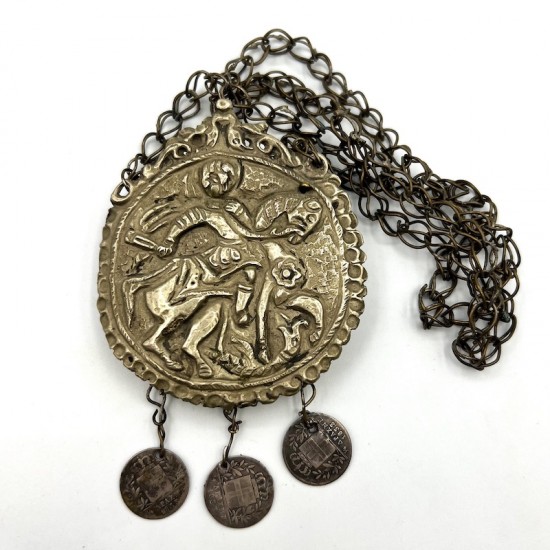
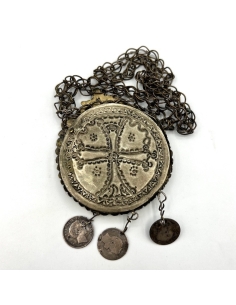
Traditional-Folk Art Greek Folk Art Amulet Saint George Dodecanese T03 €350.00 19th century Greek traditional amulet from the Dodecanese Add to cart
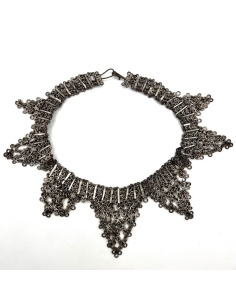
Traditional-Folk Art Traditional Necklace of Cyprus T02 €150.00 Traditional jewelry of Cyprus from the early 20th century Add to cart